On the kintsugi of ptsd
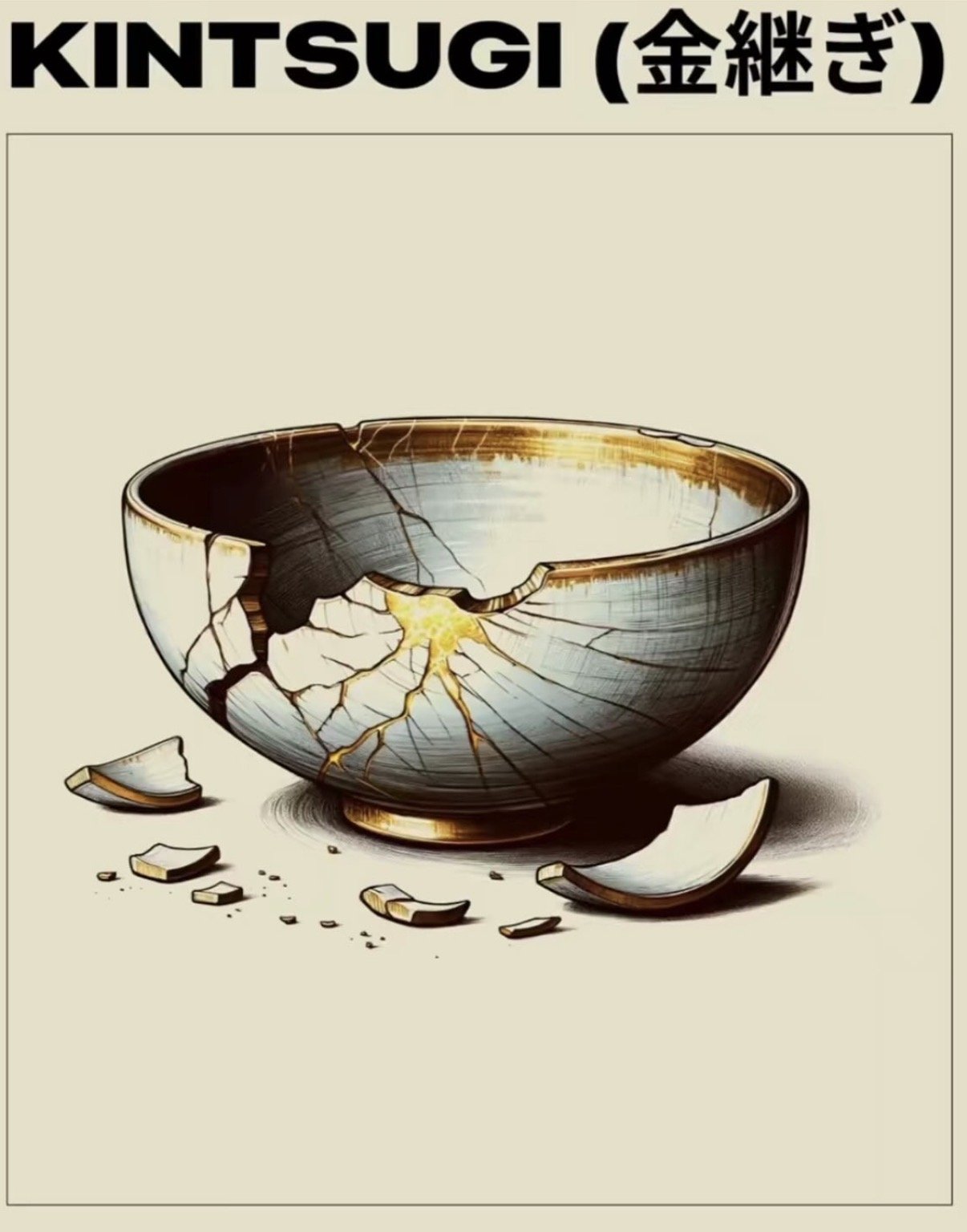
Kintsugi ethics would recognize that a vessel repaired with gold is not fragile forever. It is transformed. Sometimes it is even stronger than before. Its value increases because of what it endured and how it was restored.
Optimization systems don't track transformation well. They track baselines. Once a person is understood primarily through constraint — health, background, past disruption, nontraditional trajectory — the system optimizes around minimizing downside risk, not maximizing upside potential. This is efficient in the short term, but it obscures the reality that human capacity is highly responsive to opportunity, expectation, and trust.
If your baseline was recorded during crisis, then recovery looks like anomaly, not growth. Joy reads as instability. Ambition reads as overcompensation. Boundaries read as hostility. Confidence might be read as delusion.
Gold is interpreted as glare.
This is what happens when labels outlive their moment. A diagnosis like PTSD has become widely recognized — which matters, because visibility reduces stigma. But popular understanding of that label tends to center on impairment alone, as if trauma produces a single, stable outcome rather than a wide range of responses that can evolve over time. The person becomes synonymous with the crisis that named them. The system keeps optimizing for that version of them, the one that needed the most support, long after that version has changed.
Accommodation follows the same logic. Designed to ensure equitable access, it can quietly become something else — a ceiling dressed up as a floor. When accessibility is interpreted as minimizing demands rather than expanding pathways, the assumption embedded in the support is that limitation is permanent. People find themselves accommodated for a version of their condition that no longer reflects who they are or what they're reaching for.
The support was real. The need was real. But the category hardened, and the person kept moving, and the system didn't follow.
Kintsugi would say the gold is the evidence that repair happened. Surveillance logic says the crack is the evidence that risk remains.
These are not just different interpretations. They are different relationships to time. One understands people as capable of transformation. The other treats the past as a permanent forecast.
Recovery does not restore a prior state. The vessel, repaired, does not return to its original form. It holds water differently.
But it holds water. And it's a little more beautiful for everything it survived.